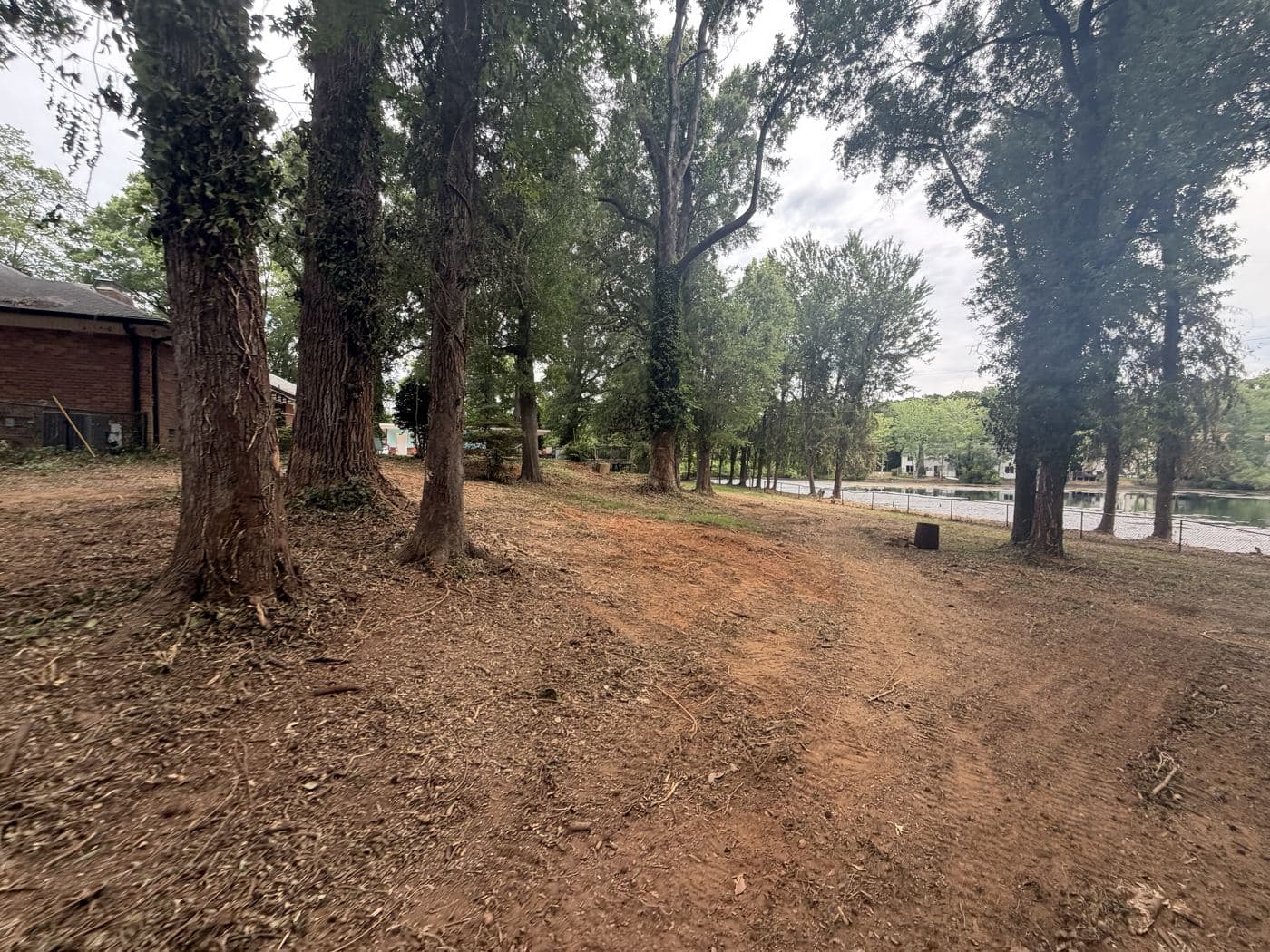
Forestry mulching turns unwanted growth into shredded material left on the ground. Traditional clearing can take out larger obstructions and stumps where the project requires it. The right choice depends on how you’ll use the space—not simply how overgrown it looks today.
How forestry mulching works
Forestry mulching is one way to clear land, not a separate operation from clearing. A forestry mulcher uses a rotating cutting head to grind woody vegetation into smaller pieces. Those pieces stay on-site as a mulch layer instead of being gathered for disposal.
For a wooded backyard, forestry mulching can open up walking space and sightlines while keeping the trees you want. It also suits ongoing vegetation management along accessible trails and overgrown edges. Small trees, vines and brush can be processed where they stand, within the machine’s working limits.
That doesn’t mean every wooded lot suits the same equipment or treatment. Tree size, rocks, wire, access and slope affect what can be processed safely. A large trunk may need separate handling. The finished surface also contains wood fragments; it is not the same as a prepared lawn or gravel base.
Forestry mulching grinds brush rather than sorting it into separate piles of logs and branches. If you want to keep usable timber, identify those pieces first. They need a different handling plan from the material intended to become ground cover.
What traditional land clearing involves
Traditional land clearing generally separates cutting or removal from handling the resulting material. An excavator, loader or other equipment may remove larger growth, gather debris and prepare an area for the next operation. The agreed scope determines whether material is chipped, stacked or taken away.
When below-ground obstructions need removal, grubbing takes out specified stumps and roots. That excavation can leave holes which then need suitable filling and compaction. It should be identified in the estimate, rather than assumed to be included whenever a job is called clearing.
Traditional clearing does not have to mean bulldozing every tree or stripping an entire lot. The operator can work within a marked footprint and protect retained features. Land clearing is often only the first phase: shaping elevations, resolving drainage needs and preparing a structural base are separate requirements.
See how clearing, grading and site preparation fit togetherCompare the two clearing methods
These clearing methods can leave very different surfaces. Use the comparison below to identify the clearing method that fits your goal, then discuss what belongs in the estimate and what remains for the next phase.
| What changes | Forestry mulching | Conventional removal |
|---|---|---|
| Unwanted growth | Cut and shredded on-site within the machine’s capacity. | Cut, lifted or excavated as the agreed scope requires. |
| Material afterward | Woody mulch remains across the treated surface. | Debris is handled separately; disposal must be specified. |
| Stumps below ground | Usually remain unless separately treated or removed. | Can be removed where included in the work. |
| Soil disturbance | Often less digging, but machine traffic still matters. | More disturbance where excavation is needed. |
| Finished use | Often suits open woodland, access and maintenance. | Can support a defined construction or surfacing footprint. |
| Extra work | May need follow-up treatment or preparation for grass. | May need filling, shaping, stabilization and compaction. |
Choose a method for your goal
Start with the next use of your land. If you want to walk through the woods, reach a fence or see the back of your yard, removing every underground obstruction may add work you do not need. A managed woodland surface can be a perfectly useful finish.
For driveways, a shed foundation or a house footprint, the requirements change. Traditional clearing must be planned around the support that the finished surface needs, and buried organic material can decay and leave voids. A build-ready pad requires more than an area that looks open in a photograph. Bring the builder’s requirements into the discussion before work begins.
You can also combine approaches. A future building footprint may need removal and site prep while the surrounding acreage stays wooded with lighter treatment. Define those areas separately so you are not paying for the same intensive finish everywhere.
Mark the boundaries of each work area on a sketch or aerial image. A property may need a clear access route now and a larger improvement later. Explaining both stages helps avoid treating an area twice or leaving material where you will soon need a prepared surface.
- Woodland access: prioritize usable paths, retained trees and manageable ground cover.
- Future lawn: plan for debris handling, soil preparation, sunlight and establishment.
- Construction: identify the footprint, required removals and the next trade’s specifications.
What happens to stumps and regrowth?
A stump cut near the surface has not been dug out. Even when a treated area looks tidy, substantial wood may remain underneath. Discuss any stump that could obstruct mowing, fencing, planting or later construction before choosing the finish.
Forestry mulching clears overgrown land without necessarily killing every plant below ground. Some woody species resprout, and new seedlings can emerge as more light reaches the soil. Ongoing land management may involve suitable mowing, selective follow-up removal or a species-specific treatment plan.
Invasive growth deserves particular attention. Cutting the visible stems may improve access while leaving the underlying problem active. Identify what is growing and agree on a realistic maintenance and management approach. One visit should not be represented as a permanent cure for all future growth.
A simple question helps: once the machines leave, can you maintain the area with the tools you already have? If not, discuss that before accepting a woodland finish for a space you expect to mow.
Texas A&M Forest Service: mulching and follow-up treatment (opens in a new tab)Can you grow grass afterward?
Yes, a cleared area can become a lawn, but spreading seed over a thick bed of wood chips is not a complete lawn-installation plan. Grass needs suitable soil contact, moisture, light and timing. Large fragments and uneven piles can get in the way of establishment and future mowing.
NC State Extension notes that grass has difficulty growing through woody material unless it is relatively thin. It also advises against mixing that material into soil where new plants are being established. Decide how excess chips will be handled before bringing in seed or sod.
Look upward as well as downward. Keeping mature shade trees may be exactly what you want, but it affects the turf options underneath. A shaded woodland path and a sunny lawn are different outcomes. Tell us which one you have in mind so the clearing and follow-on work match.
NC State Extension: woody mulch and establishing grass (opens in a new tab)Forestry mulching cost versus removal
Forestry mulching can have a lower upfront cost when one machine processes suitable growth and the mulch stays on-site. Fewer material-handling steps can reduce time and disposal expense. That advantage matters most when the resulting surface already suits your intended use.
Traditional clearing may involve separate cutting, loading, hauling and stump work. The cost increases with the actual tasks, not simply because a different name appears on the estimate. Dense large growth, restricted access and difficult terrain can make either approach slower.
A mulching cost estimate should reflect the finish you need, not just acreage. Opening up an accessible wooded area is different from removing obstructions and preparing a smooth surface. If you later need chips removed or additional ground preparation, include that in your overall budget from the start.
There is no dependable acres-per-day figure for every property. Light growth on accessible land and dense stems on an awkward slope are different jobs. Forestry mulching is often faster when it avoids separate loading and disposal, but multiple passes or difficult conditions can change that comparison. Ask for a schedule based on the actual site.
- Access and mobilization: gates, approach routes and room for equipment.
- Growth and obstacles: stem size, density, old fencing, rubble and hidden debris.
- Material handling: what stays on-site and what the crew hauls away.
- Required finish: stump treatment, surface preparation and follow-on services.
Protecting soil and managing runoff
Leaving shredded material on the surface can cushion rainfall and help protect exposed soil. Forestry mulching can also avoid some digging because established roots often remain in place. Neither benefit means there is no compaction risk: heavy machinery still needs to travel through the work area.
Wet conditions, repeated passes and poorly chosen access routes can damage the ground. Around Charlotte, saturated clay is a reason to assess timing carefully, not a reason to push through just because a machine can enter. Your contractor should consider ground conditions along with the removal plan.
Where work leaves bare soil on your land, discuss stabilization and how runoff will move across the site. Mulch alone does not correct a drainage problem, and clearing brush does not automatically create the elevations your next project needs. Avoid treating appearance as proof that the groundwork is finished.
UC Extension: soil and operational considerations (opens in a new tab)Selective clearing in Mint Hill
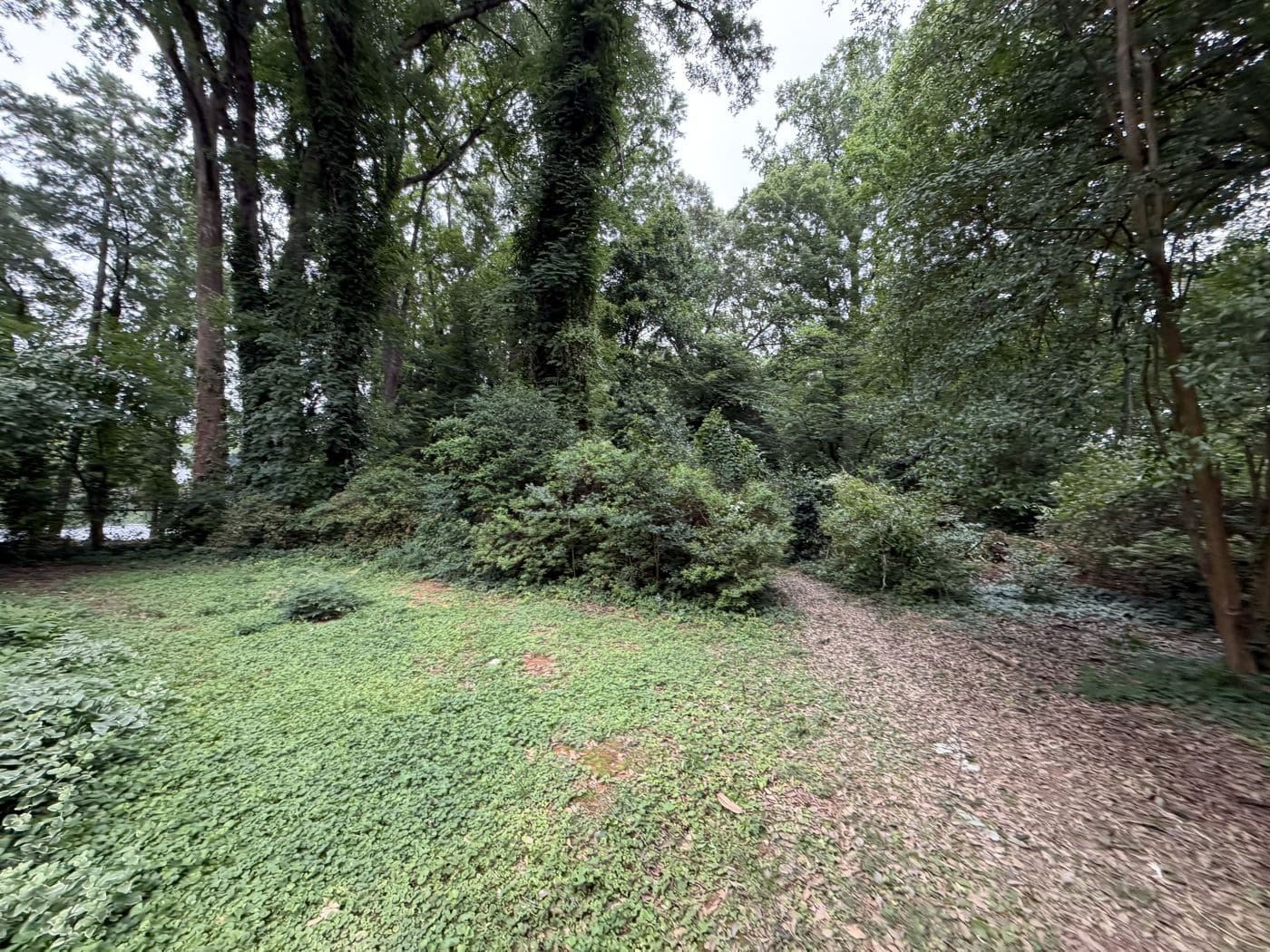
Our brush clearing work in Mint Hill shows why the desired result matters. Dense undergrowth was removed while mature trees stayed. The space became more open without turning the whole wooded area into a construction footprint.
The work was completed by Urban Lawn & Landscape, our sister company under David’s ownership. For a similar property, the useful starting point is deciding what should stay, what should go and how you want to use the cleared space. Those decisions guide the approach and the amount of ground disturbance needed.
Plan the work around your next step
You do not need to identify the perfect machine before contacting Urban. Start with the location, photos and the result you want. We provide land clearing, grading and site-preparation services around Charlotte and nearby North and South Carolina communities.
Show us the access point, the vegetation you want removed and any features you need protected. Mention known utilities, old wire, rubble and anything hidden beneath the growth. If another trade is following us, send the plans and its requirements too.
We’ll review the work with you and define the finish before scheduling. That gives you a useful estimate for your land and a clear understanding of what comes next, whether you want an open backyard or preparation for a larger improvement.
Explore Urban’s clearing servicesLet’s plan your clearing project
Tell Urban the location, what you want removed and how you’ll use the space afterward. Send a few photos with your request. David will review the work and help you plan the next step.
Get my free quote